Native vs. Cross-Platform Mobile Development: How to Choose in 2026
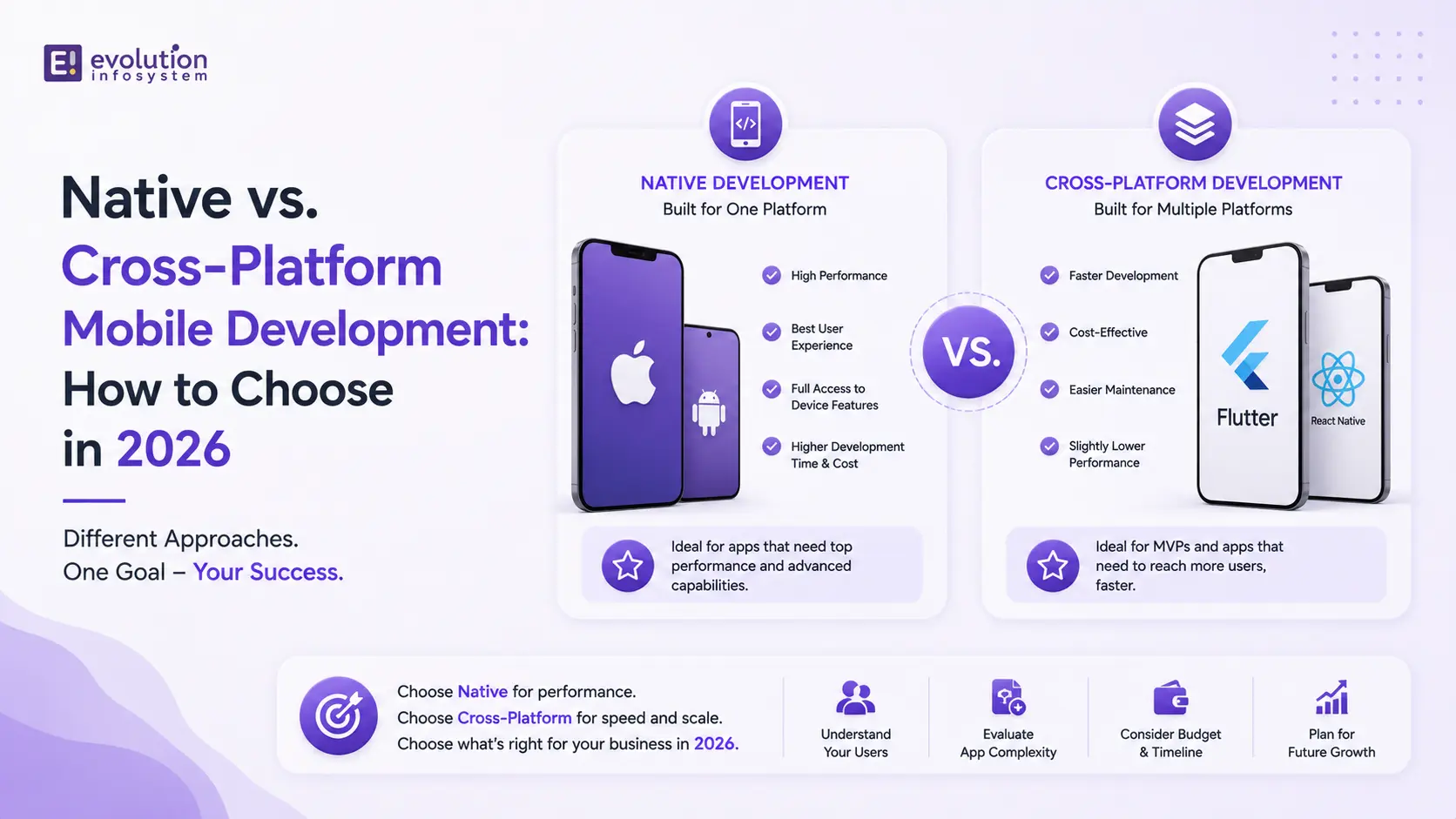
Mobile development has always come with a fundamental decision: build once for all platforms, or build separately for each. Today, this decision is more nuanced than ever – and the right answer depends entirely on what you’re building, who’s building it, and what you need it to do.
The old narrative – native is always better, cross-platform always compromises – is no longer accurate. Cross-platform frameworks have matured to a point where most applications are indistinguishable from native in both performance and user experience. But “most” is not “all,” and the exceptions matter.
Here’s a clear breakdown of both approaches, where each wins, and how to make the call correctly for your specific situation.
What Native Development Actually Means
Native development means building a separate application for each platform – Swift or Objective-C for iOS, Kotlin or Java for Android – using the platform’s own tools, UI components, and APIs.
Every platform feature is directly accessible. Every UI component behaves exactly as the platform intends. Performance is as good as software on that device can be, because the code runs directly on the platform runtime without an abstraction layer.
This matters most in specific contexts: applications that push hardware to its limits (AR/VR, real-time video processing, high-frequency sensor data), applications requiring deep OS integration (custom keyboards, live activity widgets, background location with aggressive optimization), and applications where the feel of the platform’s native UI is a product-level requirement.
Native development also means two separate codebases. Two separate teams, or one team with expertise in both ecosystems. Two separate release cycles. Two separate debugging environments. The quality ceiling is higher – but so is the engineering investment required to reach it.
What Cross-Platform Development Means
Cross-platform development means writing one codebase that compiles to native code – or near-native – for both iOS and Android. The two frameworks that dominate this space are React Native and Flutter.
React Native, maintained by Meta, uses JavaScript and React to build mobile interfaces that render using native platform UI components. If you have a web development team already working in JavaScript and React, React Native significantly lowers the barrier to mobile – the mental model is familiar, and a meaningful portion of business logic can be shared with a web application.
Flutter, maintained by Google, uses Dart and renders UI through its own graphics engine (Skia/Impeller) rather than native platform components. This means Flutter UIs look identical across platforms – which is either an advantage (design consistency) or a disadvantage (doesn’t feel fully native on either platform) depending on your product requirements. Flutter’s performance is consistently strong, and it commands the largest share of cross-platform development adoption among new mobile projects.
Both frameworks have reached a level of maturity where the “it feels like a hybrid app” criticism no longer holds for well-built applications. Apps like Discord, Airbnb (React Native in earlier iterations), and a significant portion of the Google product suite (Flutter) demonstrate what’s achievable with cross-platform frameworks at production scale.
Where Native Still Has the Clear Advantage
→ Hardware-intensive applications.
Augmented reality, real-time 3D rendering, continuous high-frequency sensor processing, and applications that push GPU limits still perform better in native code. The abstraction layer in cross-platform frameworks – even Flutter’s compiled Dart – introduces overhead that matters at the extremes of hardware utilization.
→ Deep platform integration.
Features that rely on the latest platform-specific APIs – iOS Live Activities, Dynamic Island interactions, Android Predictive Back, custom notification channels – are available natively immediately on release. Cross-platform frameworks typically lag by weeks to months before these APIs are wrapped and accessible. If your application’s competitive advantage depends on staying at the leading edge of platform capabilities, native development removes that dependency.
→ Platform-specific UI conventions.
Some applications need to feel unambiguously native to the platform. Banking apps, health applications, and OS-level utilities benefit from UI components that users recognize and trust because they’re the same components used throughout the rest of the operating system. Flutter’s custom rendering engine produces excellent UIs, but they’re Flutter UIs – not iOS or Android UIs.
Where Cross-Platform Wins
→ Single codebase, two platforms.
For the majority of business applications – productivity tools, marketplaces, SaaS mobile clients, e-commerce apps, content platforms – a single well-built Flutter or React Native codebase reaches both platforms with 80–90% code sharing. The engineering efficiency is real.
→ Faster iteration.
One codebase means features ship to both platforms simultaneously. Bug fixes are applied once. One set of unit tests. One deployment pipeline. For teams iterating quickly on product, this velocity advantage compounds significantly over time.
→ JavaScript ecosystem alignment (React Native).
If your product already has a web frontend in React, React Native allows meaningful code sharing between web and mobile – shared business logic, shared type definitions, potentially shared component libraries via React Native Web. For teams operating across both surfaces, this reduces context-switching and accelerates both roadmaps.
→ Team size and specialization.
Native development requires iOS specialists and Android specialists – two separate competencies. A cross-platform team requires one shared competency. For most product teams, the talent pool for React Native and Flutter developers is deeper and more accessible than the combined pool of senior iOS and Android engineers.
The Decision Framework
Run your app through these four questions:
1. Does your app require deep hardware access or cutting-edge platform APIs?
Yes → Native is the safer choice.
No → Cross-platform is viable.
2. Do you need to be on both iOS and Android?
Yes → Cross-platform’s efficiency advantage is meaningful.
Single platform only → Native.
3. What is your team’s existing skill set?
Strong JavaScript/React → React Native.
Mobile-first team open to a new framework → Flutter.
Existing iOS or Android specialists → Native.
4. How fast do you need to iterate?
High iteration velocity required → Cross-platform.
Stability over speed, long release cycles → Native is manageable.
For the majority of applications – B2B tools, consumer apps, e-commerce, marketplaces, SaaS mobile clients – the answer is Flutter or React Native. The use cases where native is genuinely the better technical choice are real but represent a minority of what businesses actually need to build.
React Native vs. Flutter: Which Cross-Platform Framework?
If you’ve decided on cross-platform, the React Native vs. Flutter decision comes down to three factors:
→ Team background.
React Native is JavaScript. Flutter is Dart. If your team writes JavaScript, React Native lowers the learning curve. If you’re starting fresh or your team is open to a new language, Flutter’s performance consistency and UI control are compelling.
→ UI requirements.
If your design requires pixel-perfect consistency across platforms, Flutter’s custom rendering engine is an advantage – you get exactly what you design, on both platforms, every time. If you want your app to feel native to each platform using the platform’s own UI components, React Native’s approach is closer to that goal.
→ Ecosystem maturity.
Both ecosystems are mature. Flutter has the larger community for new mobile projects. React Native has the broader enterprise adoption and a longer production track record.
There is no wrong choice between the two for most applications. Pick the one that aligns with your team’s strengths and your product’s UI requirements.
At Evolution Infosystem, we build native iOS and Android applications, as well as cross-platform solutions using Flutter and React Native. Every recommendation we make is based on your product’s requirements, performance goals, scalability, and long-term maintenance needs, not a preference for a particular framework. If you’re evaluating the right approach for your next mobile application, explore our mobile app development services to learn how we help startups, SMEs, and enterprises build scalable mobile products using Flutter, React Native, Swift, and Kotlin.
Frequently Asked Questions (FAQs)
Is cross-platform mobile development as good as native?
For the majority of applications – business tools, marketplaces, e-commerce, SaaS clients, content platforms – yes. Flutter and React Native have matured to the point where performance and user experience are comparable to native for most use cases. The exceptions are hardware-intensive applications, deep platform integrations, and apps that require cutting-edge platform APIs immediately on release.
Should I use Flutter or React Native in 2026?
Flutter if you have a mobile-first team, need pixel-perfect UI consistency, or are starting a new project without existing JavaScript infrastructure. React Native if your team already works in JavaScript and React, or if you need to share code between a web and mobile product.
What is the main advantage of native mobile development?
Direct access to all platform hardware and APIs, maximum performance at the extremes of hardware utilization, and UI components that are identical to the platform’s own system interfaces. These advantages matter for AR/VR applications, real-time processing, and any app that requires the latest platform features immediately on release.
Can you mix native and cross-platform development?
Yes. A common pattern is a React Native or Flutter shell for the main application with native modules for specific features that require platform-level performance or API access. This hybrid approach captures most of the efficiency of cross-platform development while removing the ceiling on individual features.